Search This Blog

Thursday, 13 February 2014

'All Great Novel-Readers'

In Jane Austen's day, new books were expensive - a three volume set of Sense & Sensibility cost 15s when first published in 1811. Her father George had a large library of his own (500+ volumes) at Steventon Rectory but it was sold when he retired to Bath.

So families hungry to read the latest 'horrid' novels, travel guides and biographies joined a circulating library.  

However, many well-meaning people thought that novels were trashy and immoral tendency.  On 18 December 1798, Jane Austen wrote to Cassandra from Steventon: ‘I have received a very civil note from Mrs Martin, requesting my name as a subscriber to her library... My mother finds the money... Mrs Martin tells me that her collection is not to consist only of novels, but of every kind of literature, etc. She might have spared this pretension to our family, who are great novel-readers, and not ashamed of being so; but it was necessary, I suppose, to the self-consequence of half her subscribers ’.


In Pride & Prejudice, Mr Collins was horrified when Mr Bennet asked him to read aloud to the ladies: ‘On beholding it (for everything announced it to be from a circulating library), he started back, and begging pardon, protested that he never read novels’. Instead Mr Collins chose Fordyce’s Sermons to entertain the girls.

Images:
Portico Library, Mosley St, Manchester. This beautiful building was built by Thomas Harrison. It opened to subscribers in 1806. © Sue Wilkes.
A Halifax Circulating Library ticket, c.1790-1800. Author's collection.

Hugh Thomson illustration of Mr Collins for Pride & Prejudice.

Friday, 31 January 2014

Netley Abbey


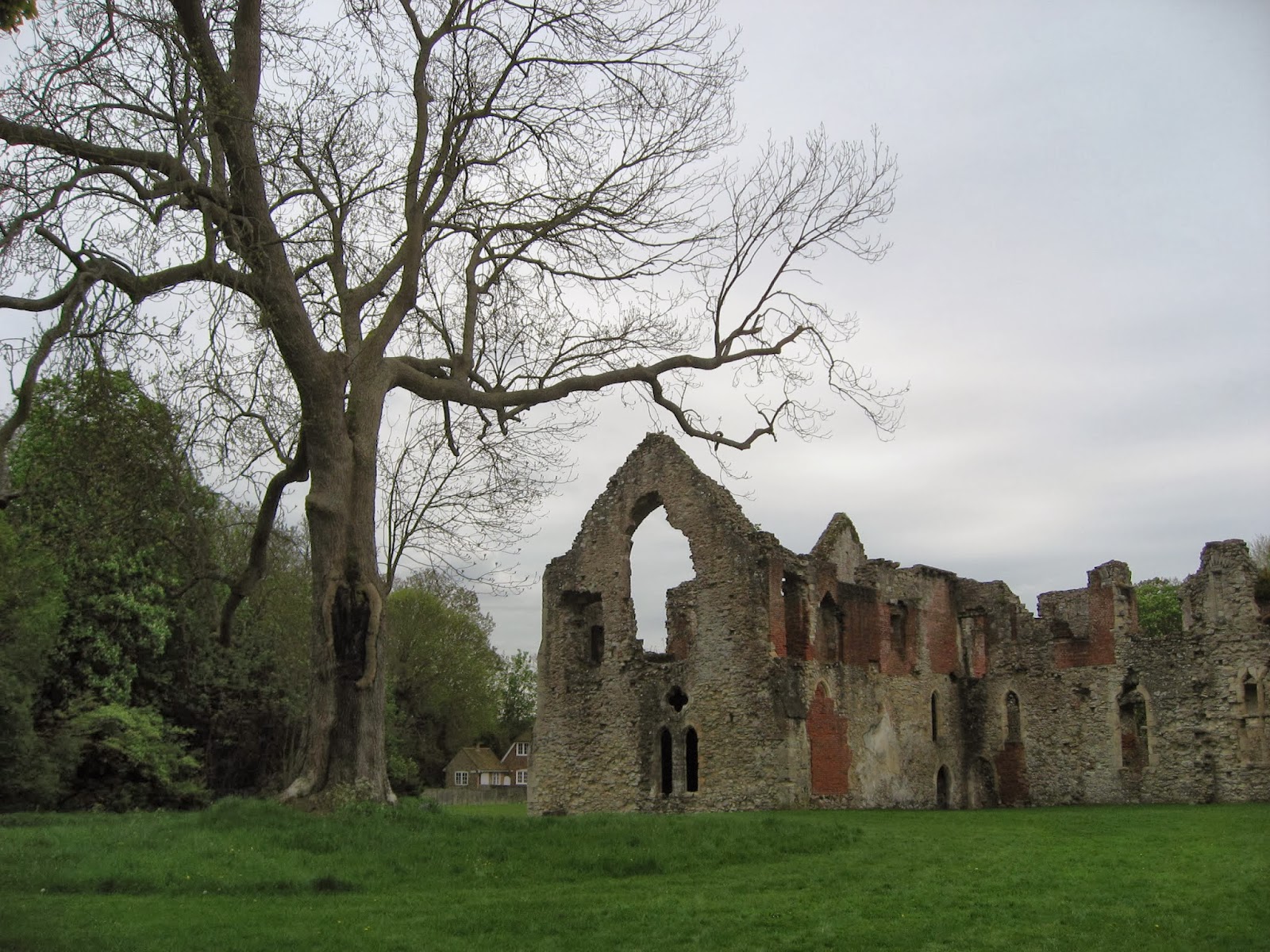
Netley Abbey, near Southampton, was home to the Cistercian Order. It was founded by the Bishop of Winchester in 1238, but fell victim to Henry VIII’s dissolution of the monasteries 300 years later.


The abbey became home to Sir William Paulet, and it was used as a family home until the early eighteenth century, when it was abandoned. 


Its romantic ruins provided inspiration for painters like John Constable, author Horace Walpole and the poet Thomas Gray. Netley is said to have provided inspiration for Jane Austen’s novel Northanger Abbey, which was published posthumously the year after her death.


In a letter to her sister Cassandra, Jane Austen mentions a boat ride along the nearby river Itchen with her two nephews in October 1808.

Images of Netley Abbey © Sue Wilkes

Wednesday, 1 January 2014

Jane Austen in Southampton

 
Following her father George's death in January 1805, Jane Austen, her mother and sister Cassandra eventually settled in Southampton, where they stayed until mid-1809.

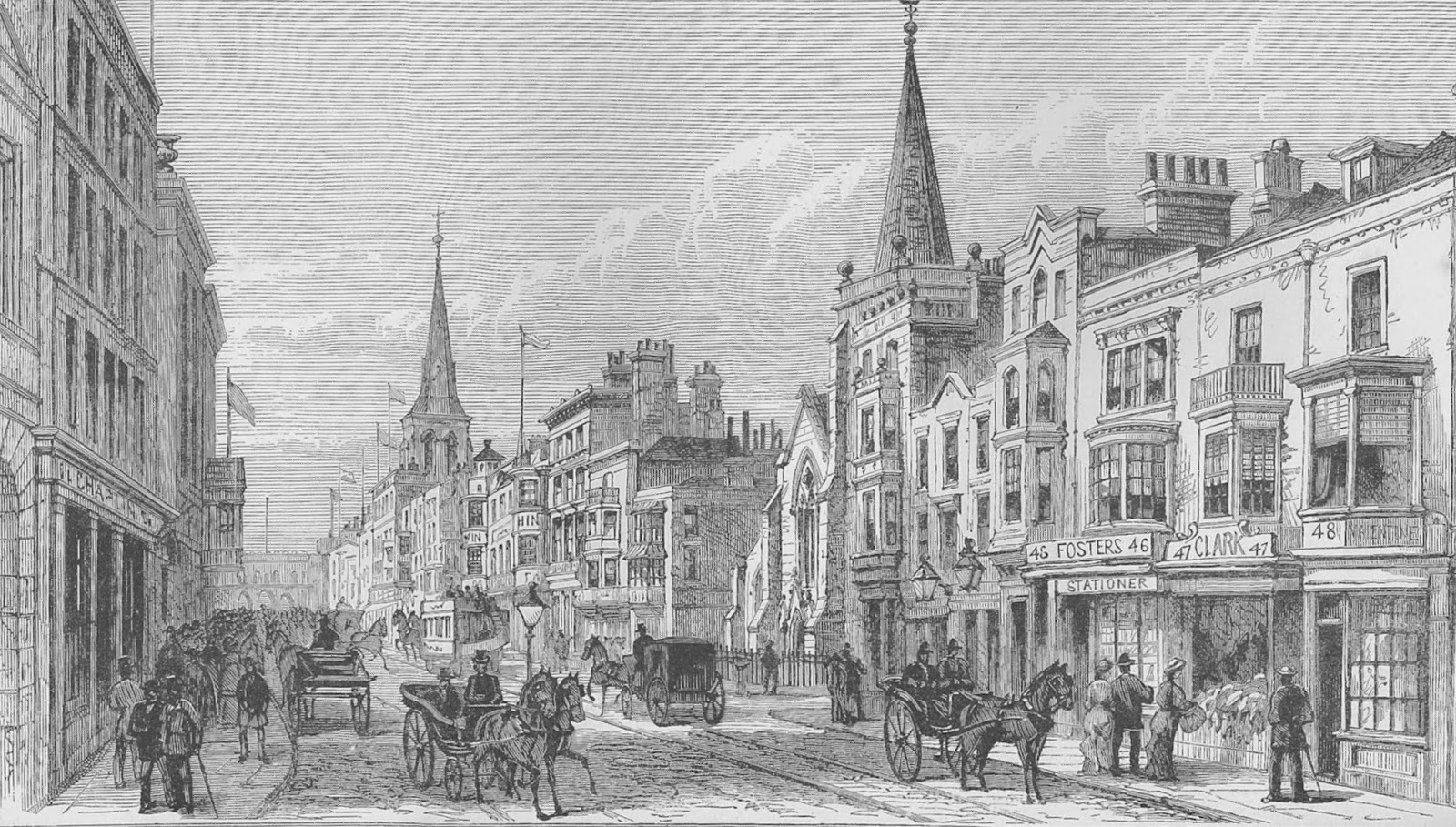
In March 1807 they took a house in Castle Square, on the site of the Juniper Berry pub (images left and below). Jane attended at least two dances in the Dolphin Hotel (images right and below) in a ballroom on the first floor (behind the bay windows).

Sadly, many of Southampton's historic buildings were lost owing to bomb damage in WW2, including All Saints, the church where Jane worshipped, on the high street.


The City of Southampton Society has published a free heritage trail leaflet so that you can follow in Jane's footsteps.


All photos (c) Sue Wilkes.
Engraving of Southampton High Street in the 1890s from Our Own Country, 1898. Author's collection.


The Dolphin Hotel can be seen on the right hand side of the street in the illustration.
 

Sunday, 22 December 2013

Merry Christmas Everyone!

Merry Christmas and a Happy New Year to all my readers! I hope you all have a wonderful holiday.

Images: Hugh Thomson illustrations for a story set in Regency times for the Christmas issue of The Graphic, 1889.


Tuesday, 3 December 2013

Regency Cheshire Talk Photos

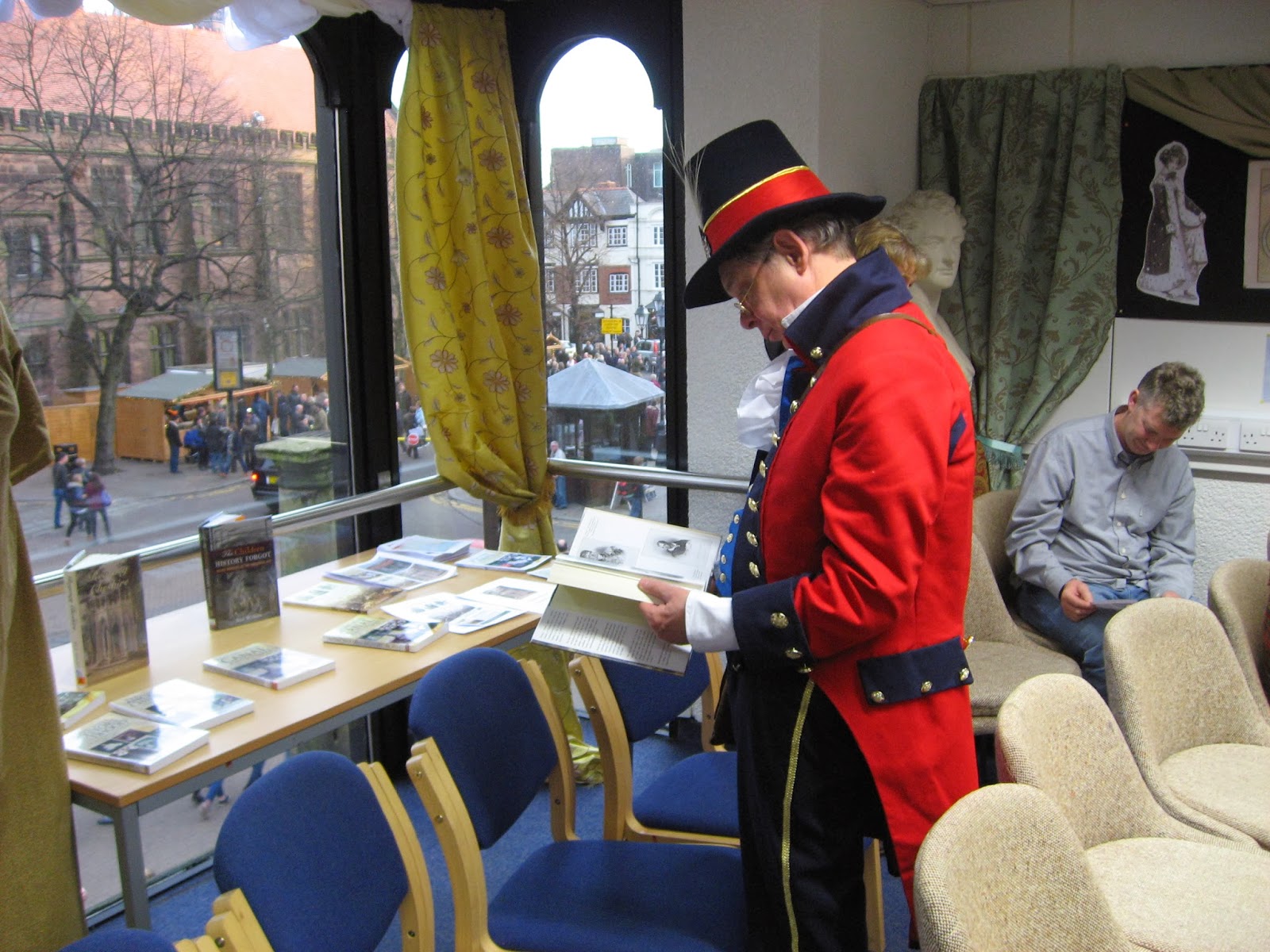
 My Regency Cheshire talk at Chester Library last Saturday was a sell-out! Many thanks to everyone who braved the Chester traffic, as the city was very busy with Christmas shoppers.
It was wonderful to see the library staff dressed up in such beautiful Regency costumes, and those members of the audience who took the trouble to come dressed Austen-era style, too.

I'd like to thank Lena Shiell, Debbie, Linda Clarke and all the library staff for making me so welcome.  The meeting room was adorned with a wonderful exhibition of Georgian prints courtesy of Chester Library, too. 
There are more photos from the event on my Sue Wilkes blog and on the Chester Library facebook page.

Images:
Chester town crier David Mitchell (top, bottom right) resplendent in his Georgian costume.  
Lena Shiell, the author (centre) and Linda Clarke.
Lena (Chester Library) and Linda Clarke (Cheshire Archives).

All photos on this blog post are © Nigel Wilkes.

Thursday, 21 November 2013

Byron in Italy!

This year we had a family holiday in Italy, and one of the highlights of our holiday was a trip to Venice, one of Lord Byron's favourite haunts: he lived there for several years.  

The first apartments which Byron rented in Italy (in 1817, the year Jane Austen died) are in the Piscina di Frezzeria, and the house (right) takes some finding as there is no commemorative plaque: you would never guess that one of the most famous Romantic poets once lived there. It must have been a very noisy household, because Byron kept his pet dogs, monkeys and foxes as there as well as a beautiful Italian mistress, Marianna Segati.

But if you go to Venice and take a ride along the Grand Canal by water-bus (vaporetto) you will see the Palazzo Mocenigo, where Lord Byron lived in 1818.  
During Byron's stay in Venice, as well as writing poems Don Juan and further instalments of Childe Harolde's Pilgrimage, he studied Armenian at the monastery on the island of San Lazzaro degli Armeni.


The monastery is a magical place to visit; the monks give guided tours to visitors, and you can see their wonderful library and historic manuscripts, and the room where Lord Byron studied the Armenian language.  There's a scholarly introduction and overview of Byron's life and works here.


Lord Byron receives an honourable mention in one of Jane Austen's letters to Cassandra, dated 5 March 1814. She wrote: 'I have read the Corsair, mended my petticoat, and have nothing else to do'.  Tantalisingly, Jane gives no hint of whether she enjoyed reading one of the best-selling epic poems of the day!


Images © Sue Wilkes:
Lord Byron's apartment, Piscina di Frezzeria.
Palazzo Mocenigo, Venice.
Plaque dedicated to Lord Byron at San Lazzaro degli Armeni.
View of 'Lord Byron's Hill' and the gardens at Isola di San Lazzaro where he used to sit and think - thank you very much indeed to the kind guide who gave permission for me to take this picture from inside the monastery.

Thursday, 7 November 2013

A Jane Austen Extravaganza!


Just a reminder that I'll be giving a talk at Chester Library on 30 November from 2-3pm as part of the library's 'Jane Austen's Regency Christmas' fun day.   I'll be reading extracts from my book Regency Cheshire, and I will have some books to sell which you can buy on the day.

However, if you've already bought one of my books (or prefer to buy a copy online first), if you bring it with you, I'll be very happy to sign it after the talk.

The library staff will be dressed in Regency costumes, and there will be dancing, music, a choir, 'Regency refreshments' and children's activities.  The ladies can have a 'Regency style makeover' and find out what make-up was like during the Georgian period,  Do join us on the day if you can! 
There are details on how to buy a ticket for the event here.