Search This Blog

Wednesday, 3 September 2014

Sweeping Miss Bates' Chimney


In Jane Austen's Emma, when Miss Bates and Mrs Weston meet Emma Woodhouse and her friend Harriet Smith at Ford's shop, Miss Bates tells Emma about all the things that have happened that morning. Not only had her mother's spectacles broken, but Patty (her maidservant) 'came to say the kitchen chimney wanted sweeping. Oh, said I, Patty, do not come with your bad news to me'. 
Early in the eighteenth century, chimney sweeps in England began sending small boys (or girls) armed with brushes to climb up inside chimneys to clear them of soot.  ‘Climbing’ was extremely dangerous. Children were sometimes sent up while the chimney was still blisteringly hot, or if a fire was still burning in the grate. A plank of wood was placed on the fire so the boy had somewhere to rest his bare feet. Cases are recorded where boys were forced to climb up burning chimneys to put out the fire. In 1817 it cost from 6d to 1s 6d to have your chimney swept; a child usually swept four chimneys per day. Apprentice climbing boys did not receive any wages, just their 'bed' (often just the soot bags) and food.
William Blake wrote about the plight of the climbing boys in his poem The ChimneySweeper, (Songs of Innocence, 1789):
When my mother died I was very young,
And my father sold me, while yet my tongue
Could scarcely cry, ‘Weep! weep! weep!’
So your chimnies I sweep, and in soot I sleep.
When Jane Austen was thirteen years old, philanthropist Jonas Hanway's Act to protect child chimney sweeps was passed by parliament. But the law was ineffective, and during Jane's lifetime humane societies such as the Society for Suppressing Climbing Boys, and reformers like Henry Grey Bennet fought to end the suffering of Britain's child sweeps and promote the use of chimney-sweeping machines instead.

Image:
‘The Little Chimney Sweep’, from Henry Sharpe Horsley, The Affectionate Parent’s Gift, T.Kelly, 1827.

Wednesday, 20 August 2014

'A World Of Torment As To Hair-dressing'

Check out my feature for Historical Honey on the momentous changes in hair-styling fashions during Jane Austen's lifetime.
Image from the Library of Congress collection:

A modern belle wearing an enormous feather in her hair going to the [Upper] Rooms at Bath. James Gillray, published January 13th 1796, by H Humphrey, New Bond Street.

Tuesday, 19 August 2014

Reviews of A Visitor's Guide To Jane Austen's England

An 'entertaining and fascinating book'. Your Family Tree, April 2015.

'Step back in time for a colourful wander through the vanished world inhabited by Jane Austen and her contemporaries...It’s a fascinating and fun trip back in time'. Karen Clare, Family Tree magazine, April 2015.


'This is an ingenious volume. The author...provides us with a detailed guide book to the habits, facilities, sights and values...in the early 19th century. Her walk-through of the territory is attractively supported by extensive quotations from the works of Jane Austen herself and from other contemporaries. The author comments that ‘ Austen’s observations of society were exceptionally astute (though she was not infallible).’

The whole gamut of middleclass society is covered from domestic details (candlelight and privies) through travel (phaetons, barouches and stagecoaches) to fashionable life in London (Beau Brummell and dandies ). Perhaps the most interesting section deals with the etiquette (and pressure) to find a suitable marital partner, but as the author observes, ‘ It’s a man’s world’. Or as Jane herself describes it; ‘ Happiness in marriage is entirely a matter of chance.’

The text is lively and well arranged and the anecdotes relevant and illuminating. There is a selection of contemporary engravings, an extensive bibliography and a useful summary of Jane’s life. This is a book which Janeites will enjoy...' Charles Kaye, FFHS book reviews.
 

'Discover the grim reality of Jane Austen’s England. While period dramas are seductive on the telly, in reality, returning to, say, the turn of the 19th century may mean that your false teeth could have been taken from a dead soldier, face powder turns your skin brown, or even black, and surgery is carried out without anaesthetic...A Visitor’s Guide to Jane Austen’s England...chaperones you across the social, health etc minefields of what could feel, in effect, like a foreign country...The world Austen moved in bordered the middle/upper class, so there is the treatment of servants to consider, and how to keep up with fashion...an entertaining read and is charmingly illustrated with contemporary images'. Shields Gazette, 19 January 2015.

 'An inviting read... A Visitor’s Guide to Jane Austen’s England gives details about the Regency that are not often covered in books written by Jane Austen or by modern Regency authors... Sue Wilkes’ engaging, conversational style, and choice of topics/anecdotes made me see the Regency world in a fresh way—one that reminded me of how strikingly similar the people and societal concerns of the 1800s are to those in the 21st century...a perfect gift for every Janeite friend and family member'. Katie Patchell, Austenprose, 1 December 2014. 

'Sue Wilkes plunges the reader straight into the delights and terrors of travelling around Georgian England in this well-researched and informative book. Her presentation is immediate and energetic: "The sheer number of travellers on the road is incredible. In his Letters from England (1807), Robert Southey said there were 'Horses and footmen, carriages of every description and every shape, wagons and carts and covered carts, stagecoaches...coaches, chariots, chaises, gigs, buggies, curricles and phaetons, the sound of their wheels ploughing through the wet gravel was continuous and incessant as the roar of waves on the sea beach.'" 
Writing in the style of a practical guidebook, Wilkes simply takes you by the hand and walks you through Jane Austen’s world. A thoroughly engaging – and very informative – ‘eye-witness’ guide to everything from medical matters to modes of travel.'
Joceline Bury, Jane Austen's Regency World, November 2014. 

'Wilkes' "A Visitor's Guide to Jane Austen's England" is an essential addition to any lover of history and/or fine literature's bookshelves.  Packed with detail and interesting quotes from Austen, her characters, and their contemporaries, along with explanations of the origins of common sayings we use now, Wilkes does an excellent job of highlighting the similarities and differences between England as I know it and the complicated and highly aromatic home of my ancestors.Thoroughly recommended!' Gill Hoffs, author of The Sinking of RMS Tayleur. 

'You need to keep your wits about you in Jane Austen’s England and Sue Wilkes’s guide is indispensable for your travel back to the late 18th century. Covering diverse topics, from travel and teeth, to food fads and the latest fashions, it is a comprehensive and entertaining guide to the customs and potential faux pas of this fascinating period.
Meticulously researched and presented in a highly readable format, Sue Wilkes uses real-life experiences, quirky anecdotes and extracts from Jane Austen’s novels to bring history back to life. It is an evocative re-creation and makes for an exciting journey into the past. I thoroughly enjoyed A Visitor’s Guide to Jane Austen’s England and would highly recommend it. And next time I take a ‘grand tour’ of the 18th century, I’ll be making sure I take my ‘dressed hart skins’ for a bug-free night in the inn'. Angela Buckley, author of The Real Sherlock Holmes.

'Although I love Jane Austen's novels, I'm ashamed to say I know very little about the period in which she lived. But no more! Having read Sue Wilkes' wonderful 'A Visitor's Guide to Jane Austen's England', I have learned all about the intricacies of Regency courtship, dowries and entails; the effect of the French wars on everyday prices; the daily life of a `lounger'; how difficult it was for men to get into breeches; and why wearing the latest fashionable headdress could give you head-lice.
Written in the style of an easily accessible guide for the modern visitor, the book tells you all you need to know about accommodation, travel, fashion, medical matters and much more. It's packed with wonderful little details about the social history of the time such as the 'slippers' gentlemen were given to wear when entering an inn 'previously worn by dozens of earlier guests', and the difference between town and country hours for dinner (it was always later in town where it was fashionable to dine between 8 and 9pm by around 1817).
From the hullabaloo of the coaching inn and the heat of the ballroom through to taking the waters at a fashionable spa, Sue Wilkes shines a spotlight on Jane Austen's England. She also includes plenty of quotations from Austen's novels to show how well-rooted they were in everyday life. It's the perfect book for dedicated Jane Austen fans who like to find out every little detail about her world, and also for those, like me, who know very little about the period.
And if I really could go back to Jane Austen's time, I'd be sure to take my own sheets...', Michelle Higgs, author of A Visitor's Guide To Victorian England.

Sunday, 17 August 2014

A Georgian Gem

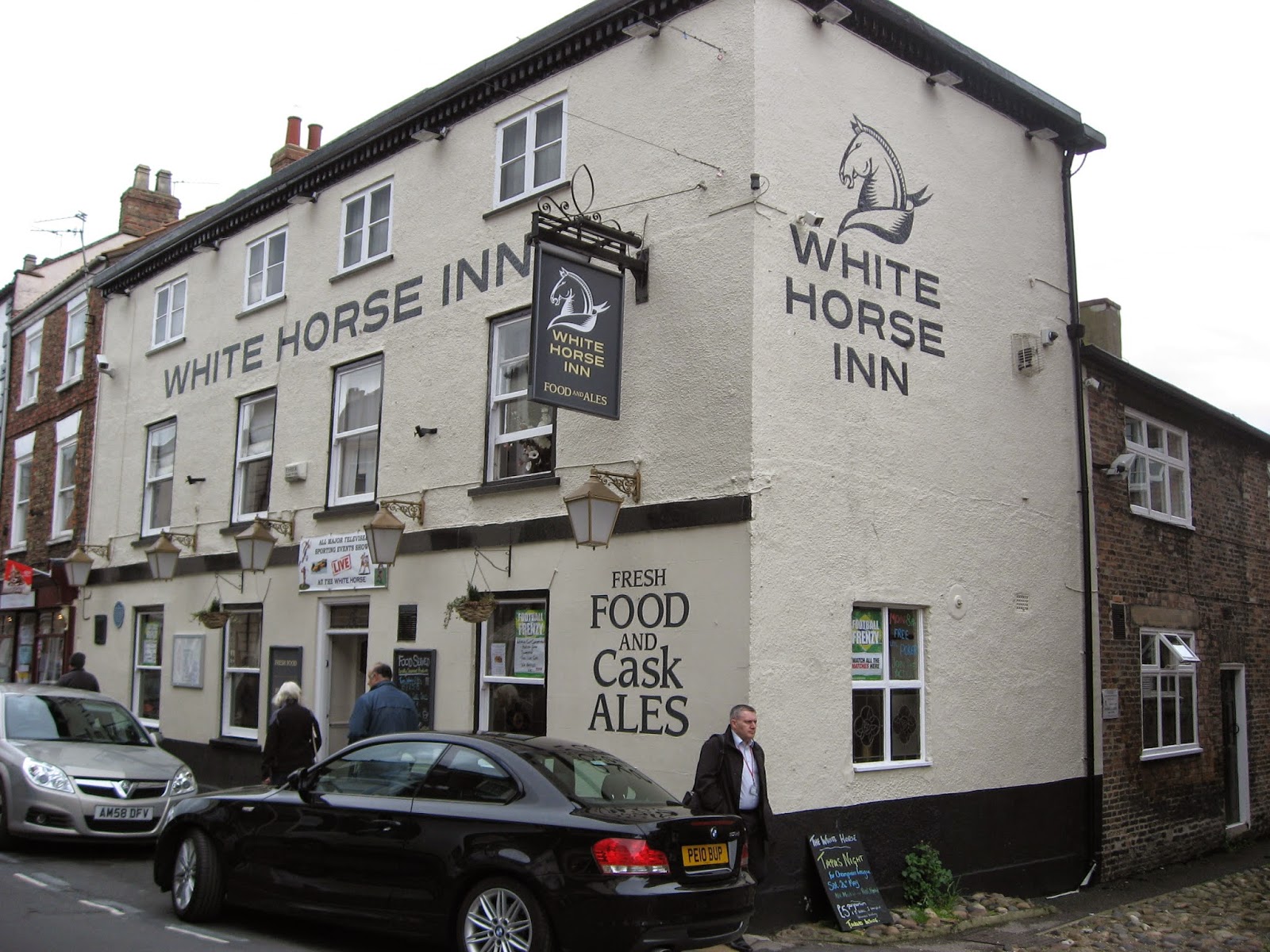
The White Horse Inn dates back to 1702.
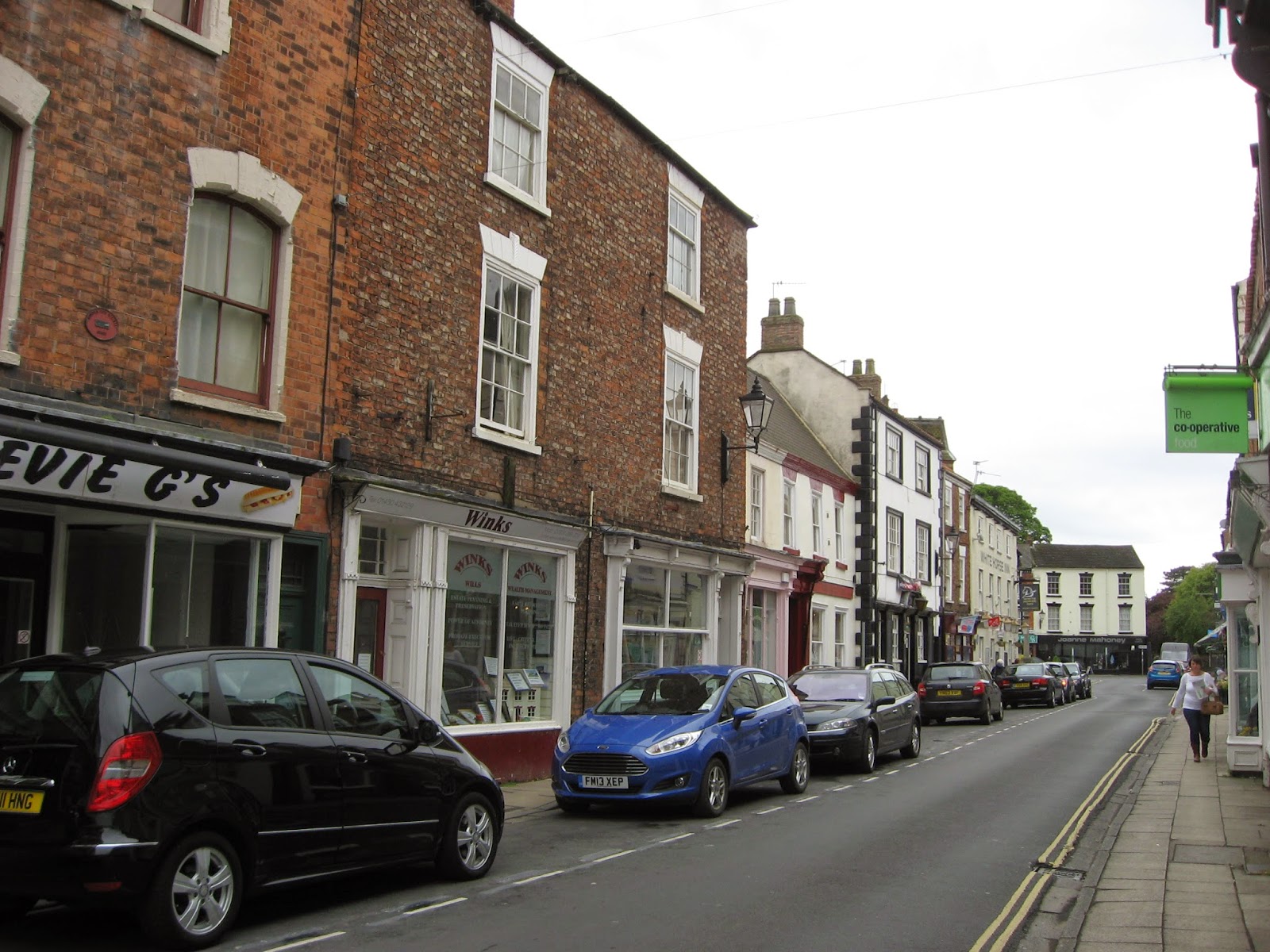
The small market town of Howden in Yorkshire is a living witness to life in Jane Austen's day.  Although Howden is famous for its medieval Minster, many eighteenth and early nineteenth century houses, shops and coaching inns have also survived.
Eighteenth century shops, Marketplace.
As you explore this bustling town you can imagine what it might have been like to go shopping in Austen's England.
Wellington Hotel, formerly the White Hart Inn.
Of course you must somehow erase the noise of the cars and buses from your mind, and imagine them replaced with the clip-clop of horses, the rattle of wheels and the blast of a coachman's horn as he sweeps into a busy innyard.                                            
Bridgegate, Howden - note arched entrance.

The former C.18th century workhouse.

Monday, 28 July 2014

Coming Soon!

My forthcoming book A Visitor's Guide to Jane Austen's England is now available for pre-order from Amazon UK (release date 30 October) and Amazon US.
Update 14 August: you can now also pre-order the book direct from Pen and Sword Books.


Darcy spurns Elizabeth at the ball, Pride and Prejudice.


Immerse yourself in the vanished world inhabited by Austen’s contemporaries. Packed with anecdotes, the book is an intimate exploration of how the middle and upper classes lived from 1775, the year of Austen’s birth, to the coronation of George IV in 1820.  My book conjures up all aspects of daily life within the period, drawing on contemporary diaries, illustrations, letters, novels, travel literature and archives. 

·       Were all unmarried affluent men really 'in want of a wife'?
·       Where would a young lady seek adventures?
·       Would ‘taking the waters’ at Bath and other spas kill or cure you?
·       Was Lizzy Bennet bitten by bed-bugs while travelling?
·       What would you wear to a country ball, or a dance at Almack’s?
·       Would Mr Darcy have worn a corset?
·       What hidden horrors lurked in elegant Regency houses?
 
Put on your dancing gloves and embrace a lost era of corsets and courtship!

Tuesday, 22 July 2014

A Visit to Whitchurch

Whitchurch Town Hall
Jane Austen's birthplace of Steventon was a small village, so she often went shopping for necessities in nearby towns and villages like Alton, Basingstoke and Whitchurch. In a letter to Cassandra (November 1800) she wrote: 'Martha [Lloyd] has promised to return with me [after Jane's visit to her], and our plan is to have a nice black frost for walking to Whitchurch and there throw ourselves into a postchaise, one upon the other, our heads hanging out at one door, and our feet at the opposite'. 
If you explore Whitchurch today, you can still see
White Hart, Whitchurch
some of the buildings which would have been familiar to Jane, such as the Town Hall, built in the late 18th century, and the White Hart Hotel, which reputedly dates back to the mid-15th century.  


The fashion magazines of Austen's day like La Belle Assemblee and the Lady's Monthly Museum often mention silk gowns and cloaks.  


Whitchurch Silk Mill
Whitchurch Silk Mill was built after Jane Austen moved away from Steventon in early 1801. It was probably constructed about 1813, although it's possible that there was an earlier mill building on the same site. There was also a silk mill at nearby Overton, another place mentioned in Austen's letters.

Whitchurch Silk Mill is still a working factory, and it has produced silk for film adaptations of Austen's novels including Pride and Prejudice and Sense and Sensibility. 

Brightly coloured silks wound on swifts at Whitchurch Silk Mill.
Photos © Sue Wilkes.

Wednesday, 2 July 2014

Astley's Amazing Amphitheatre


In August 1796, while staying in Cork St, London, Jane Austen wrote to her sister Cassandra that she was looking forward to an evening out:  ‘We are to be at Astley’s tonight, which I am glad of’.
John Philip Astley, father of the modern circus, was Staffordshire-born. While serving in the army, Astley learnt feats of horsemanship, and in 1770 he founded a ‘Riding School’ near Westminster Bridge, where he gave open-air shows during the summer evenings: a rope defined the ‘ring’ for performances. In the mornings he gave riding lessons to ladies and gentlemen. 
These early shows were fairly humble. Astley’s wife beat a drum to provide music; a fife-player was soon added. The wonderful ‘Spanish Horse’ could allegedly undo his own saddle and wash his hooves in a pail of water.  Another equine star, ‘Billy’, could take a boiling kettle off a blazing fire and arrange teacups and saucers ready for tea.  
Astley installed (circa 1780) a stage and scenery at his riding school, and a dome-shaped roof painted with leaves and trees: he renamed it ‘The Royal Grove’. Now he could give shows illuminated by candlelight, accompanied by music from an orchestra. A typical evening's fare on a November evening in 1780 at the 'Amphitheatre Riding-House' began with Ombres Chinoises (shadow puppet-plays), equestrian displays, human pyramids, etc. Clowns 'helped' with the show. Horses were not the only animal stars;  'dancing dogs' and ‘the surprising Learned Pig' put in guest appearances. 

By the date of Jane Austen's visit, pantomimes had been added to the repertoire, and Astley's horses performed dances like the minuet or the hornpipe. A box for the evening's entertainment cost four shillings (approximately £33 today); a seat in the pit was two shillings. 
In Austen’s novel Emma (1816), Mr and Mrs John Knightley, their little boys Henry and John, Robert Martin and Emma’s friend Harriet Smith spent an evening at Astley’s, where they were all ‘extremely amused’ by the show. After ‘quitting their box...they were in such a crowd, as to make Miss Smith rather uneasy’. Robert took such gallant care of Harriet that she gratefully accepted his marriage proposal the following day. 
You can find out more about Astley's Amphitheatre and his amazing life story in the latest issue of Jane Austen's Regency World; and there's lots more info on the entertainment on offer during her lifetime in A Visitor's Guide To Jane Austen's England. 

2 views of Astley’s Riding School in 1770. ‘From J. T. Smith’s Historical and Literary Curiosities’. Old and New London Vol. VI, (Cassell, Petter & Galpin, c.1878).
Entrance to Astley’s theatre, 1820. Old and New London Vol. VI, (Cassell, Petter & Galpin, c.1878).
Interior of Astley’s Amphitheatre in 1843. Old and New London Vol. VI, (Cassell, Petter & Galpin, c.1878).