Monday, 8 May 2017
An Apology and A Grumble
Whenever anyone takes the time to comment on my blogs, I'm extremely grateful. So it's extremely annoying that whenever I try to make a reply, it disappears into the ether. I have tried fiddling with the Blogger settings but no joy. (Weirdly, my comments do appear to work intermittently on my Sue Wilkes history blog). I suspect it's something to do with the pop-up blocker but who knows? So I do apologise if I appear to be ignoring you - there's some kind of technical fault and I've no idea how to fix it.

Friday, 5 May 2017
Stand and Deliver!
 Although England’s most infamous highwaymen, like Dick Turpin, ended their careers on the ‘fatal tree’ at Tyburn long before Jane Austen was born, their lurid exploits were still legendary. Highwaymen were no longer numerous but were still a force to be reckoned with. Mail-coachmen were armed with blunderbusses, and gentlemen travellers carried pistols with them when crossing areas infested by these mounted robbers.
 |
| Dr Syntax attacked by footpads. |
It was customary to hang up executed malefactors’ bodies in chains. These gruesome remnants of humanity were a familiar sight for travellers, and Jane Austen could hardly have avoided seeing them on her journeys.
For example, one frosty winter’s night in January 1796, teenage post-boy John Stanton was carrying the Warrington mail when he was stopped by two men on horseback near Helsby in Cheshire. The men tied him to a tree and said he was being watched: if he tried to escape they would slice off his arm.
 |
| Highwayman Higgins' house at Knutsford. Copyright Sue Wilkes. |
Stanton eventually escaped, and highwaymen Thomas Brown (twenty-six) and James Price (nineteen) were caught. A few weeks later they were ‘launched into eternity in the presence of an immense multitude’ at Chester (Chester Chronicle, 6 May 1796). Their corpses were hung in chains on Trafford Green, and their bones rattled in the wind for over twenty years.
Monday, 20 March 2017
Review of Gone to the Continent: The British in Calais 1760–1860

‘Dessein’s’
hotel in Calais was immortalized by Laurence Sterne’s novel, A Sentimental Journey, first published
in 1768. The hotel was run by Pierre Dessin and his family.
In Gone to the Continent, Martin Brayne gives us a series of snapshots
of British travellers’ experiences at this romantic destination.
Fans of Georgian and early Victorian
social history will find much to enjoy in this engaging exploration of the L’Hotel
d’Angleterre’s visitors. Calais was the start and end point for thousands of
Brits journeying on the Continent, whether for business or pleasure.
Visitors
included young barristers like Harry Peckham; the poet William Wordsworth, with
his sister Dorothy and wife Mary; and novelist Fanny Burney (Mme D’Arblay). Using original sources and contemporary
letters and diaries, Brayne relates the perils of the Channel crossing; seasickness;
the battles with petty officialdom; food and drink; and theatrical performances
in the hotel. Famous debtors like Beau Brummel, Emma Hamilton and Charles James
Apperley (Nimrod) also stayed in the hotel after fleeing their creditors in
England.

I enjoyed
the book immensely. I was particularly interested by the story of the
Nottinghamshire lace-makers who settled in France and set up factories there,
in an attempt to escape the post-Waterloo economic slump at home. (Nottingham was home to Luddite attacks on machinery during this period). Later, during the
1848 revolution in France, many of these English families returned home.
However, there are still lace-makers in Calais today, some descended from these
English migrants.
The book has
several charming contemporary illustrations (some plates are in colour), and
contains detailed references, a bibliography, and appendices.
As Brayne
says, ‘The Calais of Sterne and Mrs Thrale, Dorothy and William Wordsworth,
Beau Brummell and Harriette Wilson, Thackeray and Dickens has long since
disappeared but thanks to what is written by and of them, they can still be
seen dining at Dessein’s, sauntering about the Place d’Armes or strolling on
the sands.
Old Calais
lives on’.
Monday, 6 March 2017
No Dreaming Spires for Jane!

 |
| Radcliffe Camera, Oxford. |
Girls’ education was designed to prepare them for the marriage ‘market’ and their future lives as wives and mothers. Authors like Mary Wollstonecraft and Catherine Macaulay argued passionately that girls should have as good an education as boys - but no higher education colleges were open to women until over three decades after Jane Austen's death.
Cartoon: ‘Farmer
Giles & his wife shewing off their daughter Betty to their neighbours, on
her return from school. Gillray, 1809. Courtesy Library of Congress
LC-USZC2-3803.
Update 7 March: For some reason none of my replies to comments are showing online - so many thanks to Tony for all the informative comments!
Update 7 March: For some reason none of my replies to comments are showing online - so many thanks to Tony for all the informative comments!
Thursday, 2 March 2017
Bath Abbey
 |
| Bath Abbey, 1833. |
Visitors today don't see the Abbey as Jane would have known it; the building was re-modelled by George Manners in the 1830s, and restored in the 1860s and 1870s by that serial 'improver' of ancient churches, George Gilbert Scott.
The Abbey, also known as the church of St Peter and St Paul, may have been founded as early as 675; there's a
timeline here on the Abbey website.
 |
| The Abbey in the 1890s. |
During Jane Austen's day, services were held daily at 11am; the tower had a peal of ten bells. In 1785 (when Jane was ten years old), several Sunday Schools were set up in Bath; one was attached to the Abbey Church. Within a few years, over 500 children attended the schools (they had to be recommended by a subscriber to be able to attend).
Wednesday, 8 February 2017
Jane Austen Festival, Louisville

Dr Cheryl will give a talk on 'The Eulogy Jane Austen Should Have Had', and there will be tours of a Georgian home.
Visitors can enjoy delights including a Regency fashion show, a Grand Ball, afternoon tea, an Emporium, duelling gentlemen, bare-knuckle sparring, bobbin lace-making, archery and a Punch & Judy show.
On the Friday, Lord Nelson and Napoleon will attend, along with an encampment of His Majesty's Royal Navy.
 |
| Full dress for February 1805. |
You should attend in Regency dress - I look forward to seeing the photos for this amazing event!
If you can't make it to the festival, there's an updated list of Jane Austen bicentenary events in the UK here on the Jane Austen 200 website.
Monday, 23 January 2017
Ladies of Llangollen
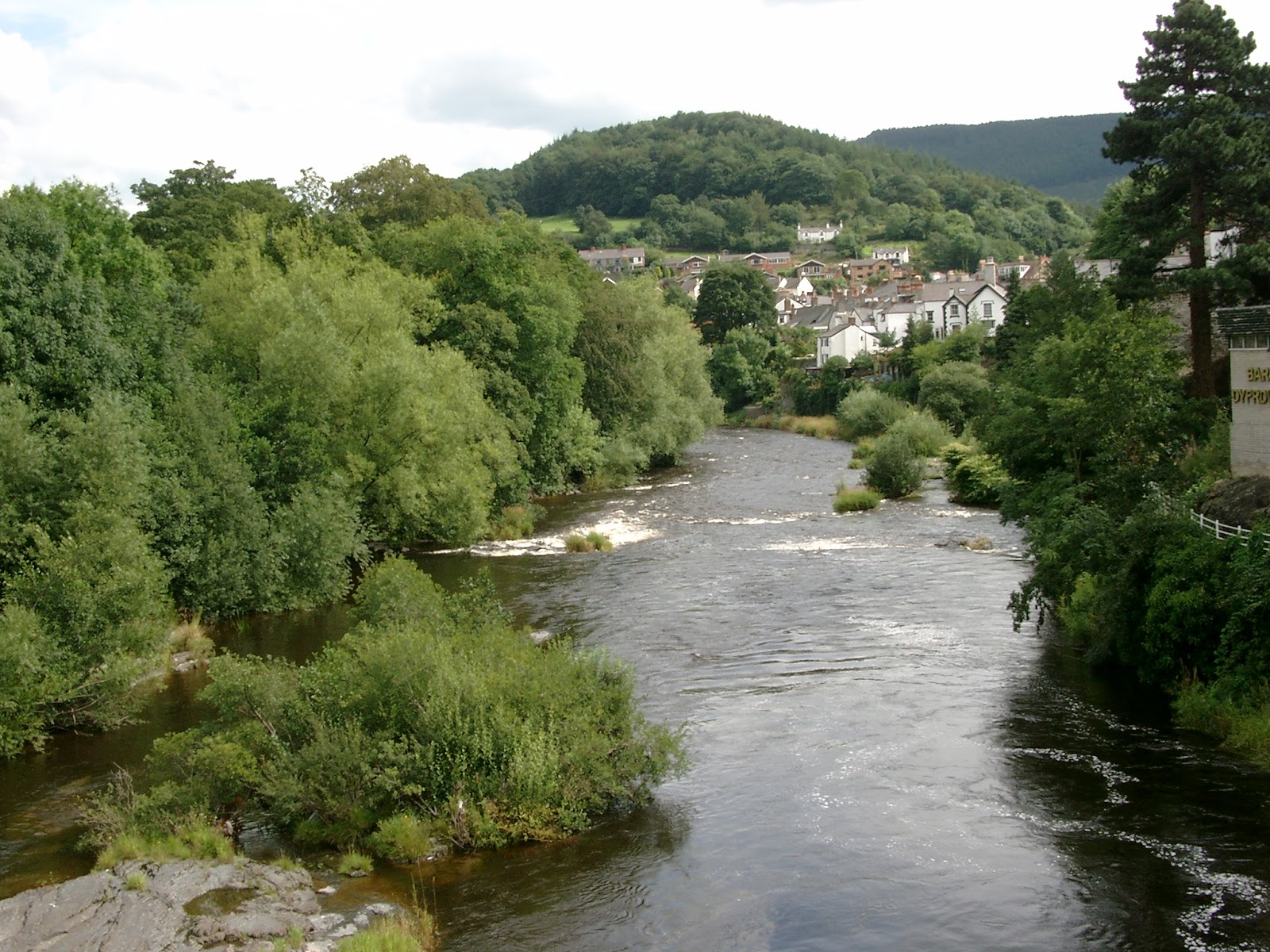 |
| The foaming River Dee at Llangollen. |
There's some more photos of the Ladies' home, Plas Newydd, here on the Llangollen website.
Subscribe to:
Posts (Atom)